Speaking at an England Golf Sustainability Event: Sustainability Is More Than Solar
This week I had the pleasure of being invited by England Golf to speak at a sustainability event held alongside the English Senior Women’s Championship.
I’d originally been asked to talk about solar power — and while that’s absolutely part of what we do at Colmworth, it quickly becomes clear that solar is really just one piece of a much bigger picture.
What I wanted to share was something slightly different: not just what we’ve installed, but how we think.
Because for us, sustainability only really works when it becomes part of how you make everyday decisions, not just a list of projects.
Solar as Part of How We Work
Like many clubs, energy is one of the first things people associate with sustainability — and that makes sense.
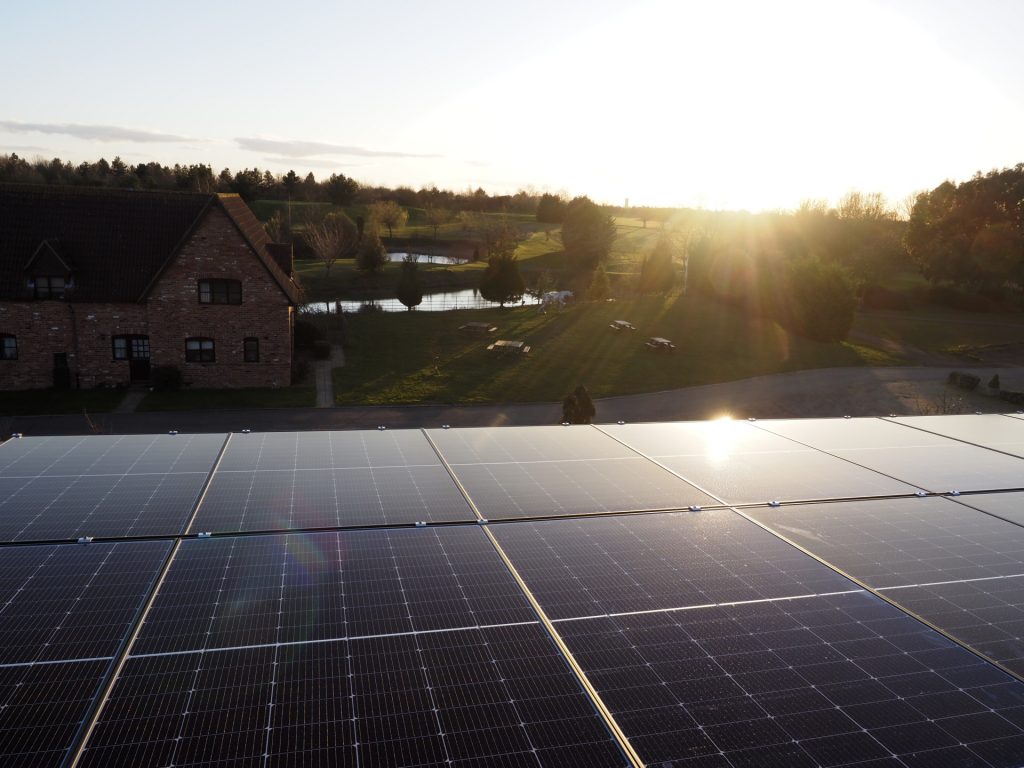
We’ve made real progress towards becoming more self‑sufficient, with around 79kW of solar installed, supported by over 200kWh of battery storage.
That system now supports the entire site:
Clubhouse
Wedding venue
Holiday cottages
Greenkeeping facilities
Irrigation
Biomass systems
Buggy fleet
To put that into something more relatable, the stored energy alone is roughly equivalent to powering an average UK home for nearly a month.
But the truth is, solar only really starts to deliver when it’s part of a wider system.
The batteries have been the real turning point. They allow us to store energy when we’re producing more than we need, and then use it later — when demand is higher, or when it’s more beneficial to do so.
It’s that flexibility — not just generation — that makes the difference.
Working With the Grid
We’re also not trying to operate in isolation.
We work closely with our energy supplier so that:
When the grid is under pressure, we can feed energy back
When there’s surplus, we can store it
So it’s not about being completely off‑grid — it’s about being a responsible and flexible part of the system.
Reducing Fossil Fuels — Where It Really Counts
For us, the biggest impact hasn’t just come from generating renewable energy — it’s come from using that energy to replace fossil fuels.
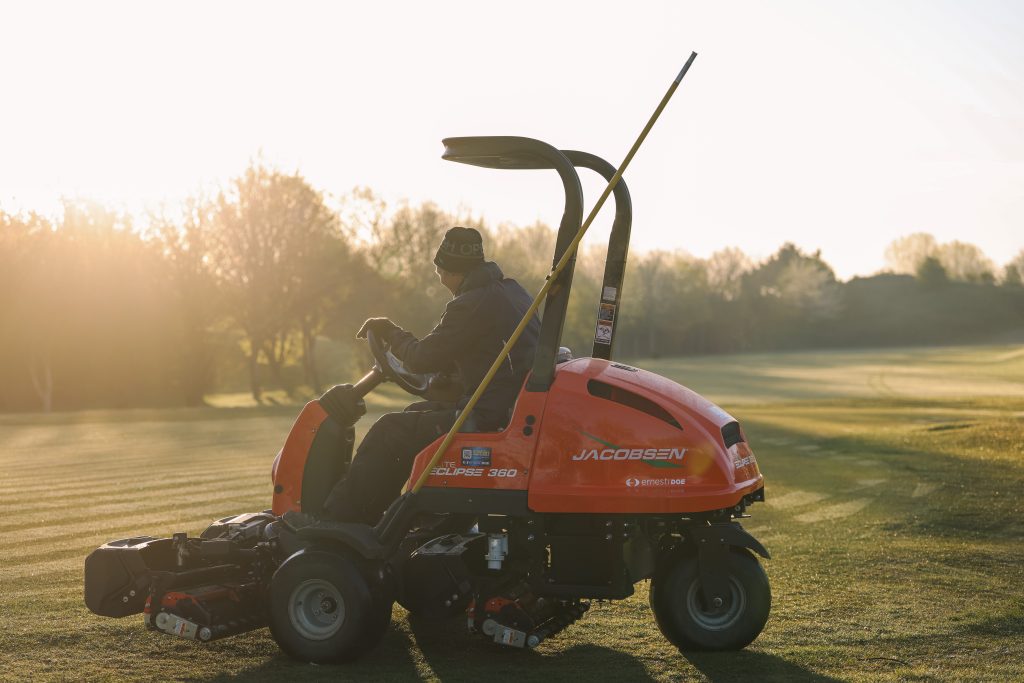
Over the past year alone, we’ve saved around 3,200 litres of diesel by building on nearly four years of experience with robotic mowing and introducing electric greens mowing.
Because of that we’re now into our third season without using a diesel fairway mower at all.
But the changes don’t stop there.
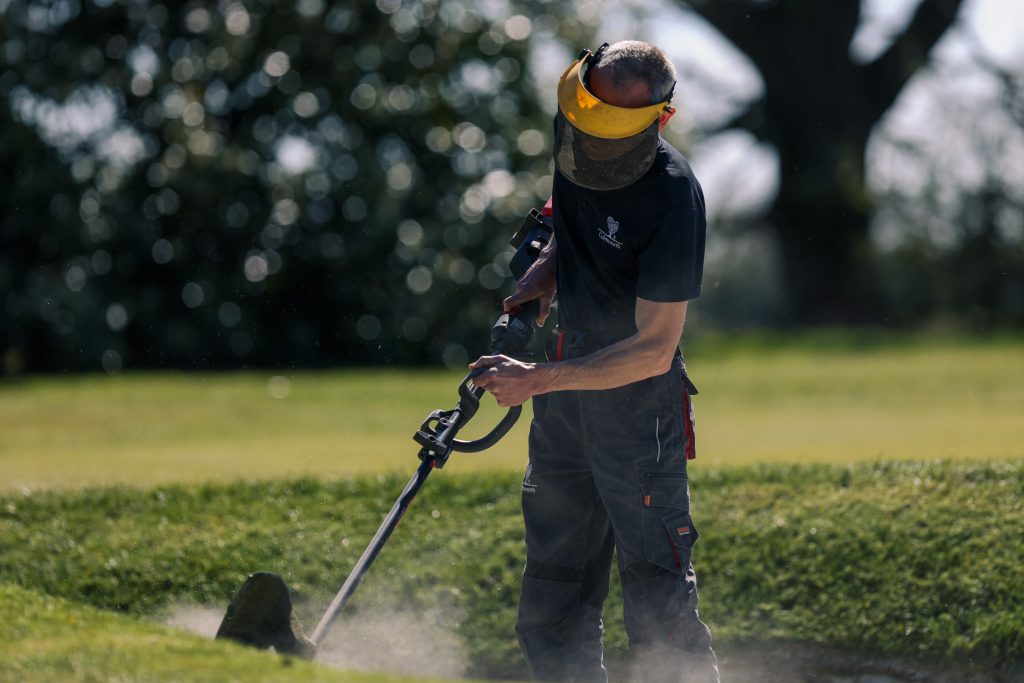
We’ve moved our entire fleet of hand‑held maintenance tools over to electric — everything from strimmers to blowers and hedge cutters.
That matters more than people often realise.
Small petrol engines — particularly two‑stroke tools — are extremely polluting for their size. The California Air Resources Board has shown that running a petrol mower for just one hour can produce as much smog‑forming pollution as driving a modern car roughly 300 miles, and a petrol leaf blower can be equivalent to over 1,000 miles of driving.
And that pollution is released right where people are working.
Along with the environmental impact, it comes with:
High noise levels
Heavy vibration
Exhaust fumes
Moving to electric has changed all of that.
It’s quieter. Cleaner. Simpler. And genuinely better for the team, for members, and for the space itself.
In many ways, this has been one of the most noticeable changes — not just environmentally, but in how the course feels.
For us, electrification hasn’t just reduced emissions — it’s improved the working environment and the overall experience of being on site.
Removing Fossil Fuels From the Kitchen
That same thinking extends beyond the course.
We’ve completely removed propane gas from our kitchen, switching entirely to electric cooking.
So there are now no fossil fuels involved in food preparation at Colmworth.
It’s a small piece of the overall picture, but an important one. It improves air quality, reduces emissions, and reinforces a simple principle:
Sustainability only works when it’s applied consistently — not just in one area, but across everything you do.
Making the Most of What We Generate
Alongside solar and electrification, many of our gains have come from relatively simple decisions:
Switching to LED lighting
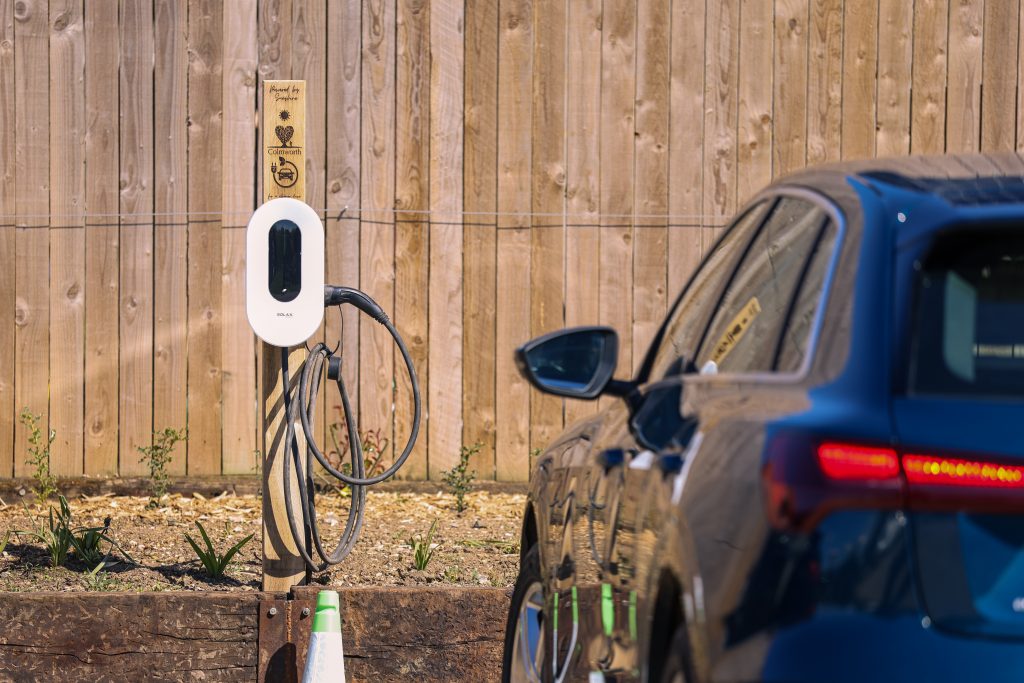
Installing EV charging
Using smart timers and controls to manage demand
None of these individually transform a site.
But together, they ensure that the energy we generate is actually used well.
Joining the Dots
Over time, one thing has become much clearer:
Sustainability works best when you stop treating it as a list of projects and start treating it as a way of thinking.
Once you do that, everything starts to connect.
Energy affects how equipment is used. Timing affects demand. Storage creates flexibility.
And quite often, the most sustainable decision isn’t about doing more — it’s about doing less!
What’s Next
We’re not finished — far from it.
But the focus remains the same: only move forward where it makes practical sense.
Next steps we’re exploring include:
Electric tractors, suited to the lighter‑duty, stop‑start nature of work on a golf course
Automowers for tees, building on what we already know works
Increasing our winter water storage, so we can capture more during wet periods and build resilience for longer dry spells
As the climate becomes more extreme, adaptability becomes just as important as efficiency.
Why It Matters
One thing I think is important is that sustainability shouldn’t feel out of reach.
Not every club can install solar. Not every site has the same resources.
But everyone can:
Use energy more thoughtfully
Look at timing and demand
Question whether something is actually necessary
That mindset works anywhere.
Final Thoughts
We’re proud of the progress we’ve made — but solar panels alone aren’t the story.